
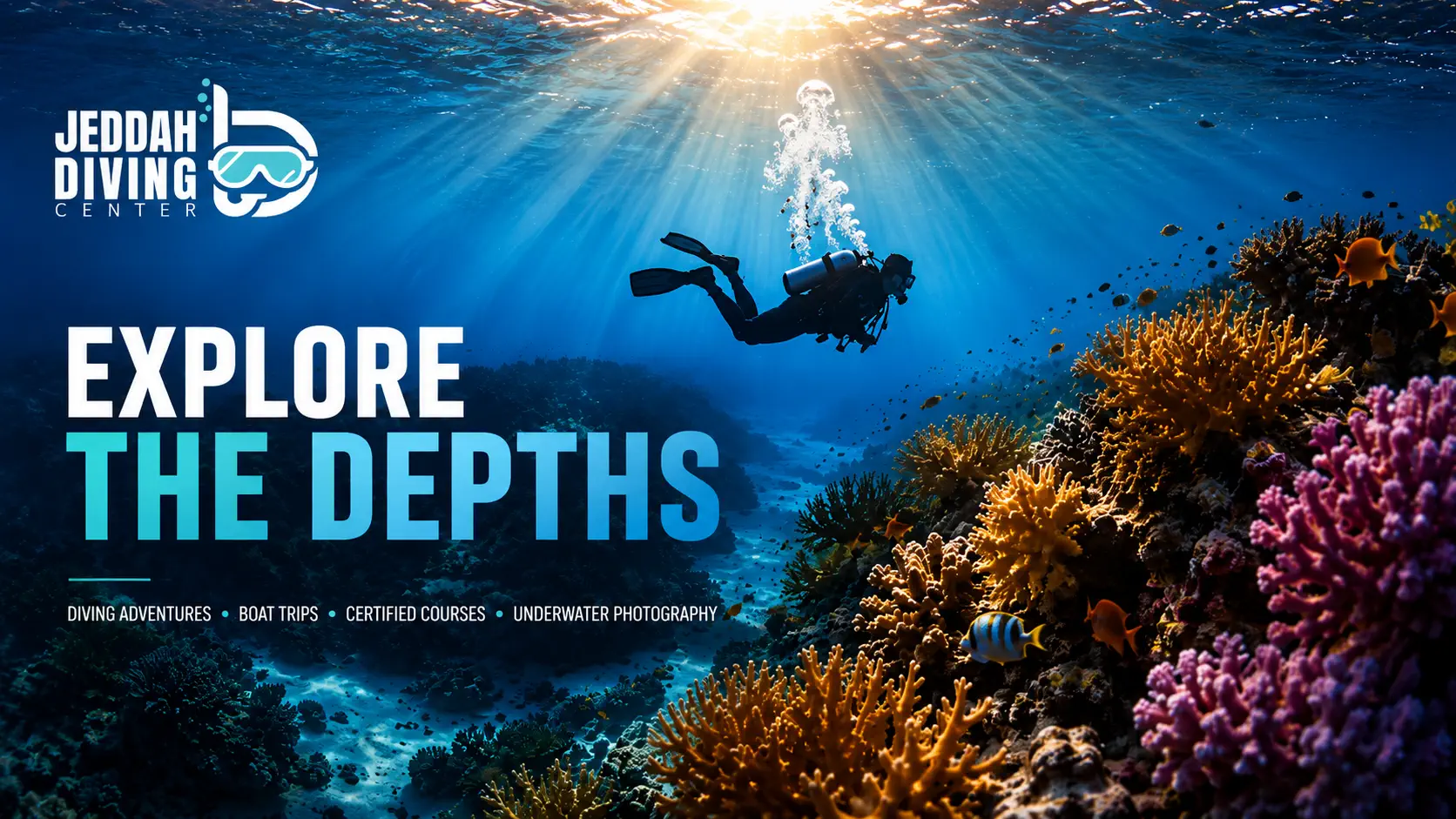
Some experiences are impossible to put into words. Descending beneath the surface of the Red Sea for the first time is one of them. The moment the noise of the outside world disappears, an entirely different one takes its place – coral reefs in colors that shouldn’t exist, schools of fish drifting past as if you belong there, and water so clear it reveals details you never imagined could be this beautiful.
This is why scuba diving in Jeddah has become one of the most sought-after marine activities in Saudi Arabia. The city doesn’t offer just another boat trip. It gives visitors a genuine chance to explore a hidden world that most people never get to see – one that exists just beneath the surface of everyday life.
Whether you’re looking for a first-time beginner experience, want to go deeper into professional scuba diving, or simply want a full day between snorkeling and yacht trips on the Red Sea, Jeddah has everything needed to make the experience truly complete.
Why the Red Sea in Jeddah Ranks Among the World’s Best Dive Destinations
Serious divers already know that the Red Sea holds a special place in the global diving community. But what makes Jeddah specifically stand out is how it brings together three things that rarely coexist: exceptional natural beauty, genuine accessibility, and a variety of dive sites that work for every level.
The first thing that strikes any diver is the water clarity. On many days, visibility beneath the surface is extraordinary – you can make out coral formations and fish from a significant distance before you even descend. This alone makes diving in Jeddah a first-class visual experience, whether you’re a curious first-timer or a dedicated underwater photographer.
But the real beauty starts the moment you go under. The Red Sea here isn’t just blue water – it’s a living ecosystem, dense with life. The coral reefs rank among the most beautiful in the world, with some formations that have been growing for hundreds of years. The marine biodiversity is genuinely exceptional: in a single dive, you might glide past a sea turtle moving calmly through the water, find yourself inside a massive school of tropical fish, then come face to face with a coral wall so vivid it looks like something from a nature documentary.
One often-overlooked advantage is the extended season. Jeddah’s waters are suitable for diving during most months of the year, giving divers far more flexibility than destinations limited to narrow seasonal windows.
The Best Dive Sites in Jeddah: Each One Its Own World
One of Jeddah’s greatest strengths is that its dive sites are genuinely different from one another. This isn’t a destination where every spot feels the same. Each site has its own character – different reef formations, different depths, different marine life – which is why experienced divers here rarely feel like they’re repeating themselves.
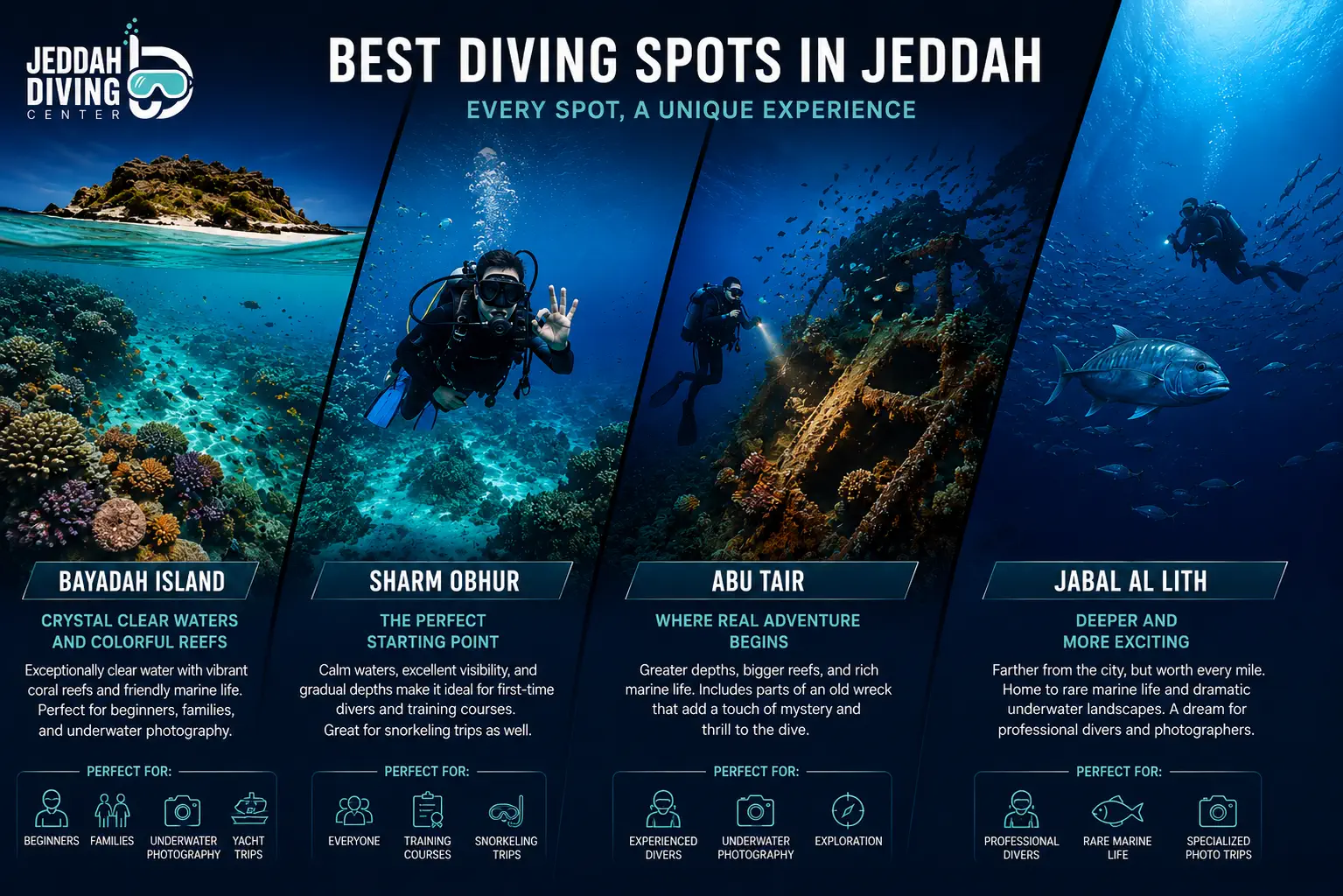
Bayada Island – Impossible Clarity and Vivid Reefs
The first thing you notice as the boat approaches Bayada Island is the color of the water. The shades of blue here are unlike anywhere else near Jeddah – so clear that you can see the seabed in detail before you’ve even entered the water. But the most beautiful part begins just beneath the surface, where coral reefs appear in striking colors alongside small fish that drift around divers with almost no fear.
The area is relatively calm with gradual depth changes, making it the ideal location for beginner divers who want a first experience without strong currents or sudden depth drops. And because the visibility is so consistently exceptional, Bayada has become one of Jeddah’s most popular underwater photography spots – even basic waterproof cameras produce stunning results there.
Best for: Beginners, families, underwater photography, full-day yacht trips.
Sharm Obhur — Where Most Divers Take Their First Breath Underwater
Ask any dive instructor in Jeddah for the best place to start, and Sharm Obhur will almost always be among the first suggestions. The reason is straightforward: the area offers everything a beginner needs to feel comfortable and build confidence. The water is calm most of the time, visibility is excellent, and the depths increase gradually — there’s no sudden plunge into the unknown.
Many of Jeddah’s dive schools rely on Sharm Obhur for their introductory training sessions precisely because the environment allows instructors to teach foundational skills clearly and safely. That said, it’s far from a beginners-only spot — experienced divers return regularly for the quality of the reefs and the density of marine life, which never really gets old. Its proximity to the city also makes it perfect for half-day trips.
Best for: All levels, training courses, snorkeling excursions.
Abu Tayer – Where the Real Adventure Begins
If Bayada and Sharm Obhur offer the calm of a strong beginning, Abu Tayer offers something entirely different. The depths are greater, the reefs are more imposing, and the marine life is denser and more varied. The moment you start descending here, there’s a sense of entering something older and more mysterious – massive coral formations stretching out like an entire submerged city.
What further distinguishes Abu Tayer is the presence of sections of old shipwreck within the area. That element alone adds a layer of genuine adventure and exploration that’s hard to find at other sites. Underwater photographers specifically love this location for the dramatic contrast between the reef structures and the open blue depths beyond.
This site calls for a solid level of water control and confidence, and professional dive centers plan trips here carefully – particularly when currents are stronger than usual.
Best for: Intermediate to experienced divers, underwater photography, wreck exploration.
Jabal Al-Lith – Deeper, Rarer, Unforgettable
When serious divers in Jeddah talk about their most memorable dives, Jabal Al-Lith comes up time and again. The site bears little resemblance to the dive locations closer to the city. The journey out takes longer, but most divers who make the trip consider it entirely worth it.
During certain seasons, the site is home to large or rare marine species that are difficult to encounter elsewhere – which makes it a particularly prized destination for professional underwater photographers and divers looking for something beyond the ordinary. The deeper you go, the more the environment transforms: bright reef systems give way to wide open blue stretches where enormous schools of fish move in slow, hypnotic formations.
Best for: Advanced divers, rare marine life encounters, specialized photography expeditions.
| Site | Best For | Highlights | Difficulty |
| Bayada Island | Beginners & families | Crystal clarity, colorful reefs | Easy |
| Sharm Obhur | All levels | Calm waters, diverse activities | Easy to moderate |
| Abu Tayer | Intermediate & advanced | Large reefs, shipwreck sections | Moderate |
| Jabal Al-Lith | Advanced divers | Rare marine life, exceptional depths | Advanced |
How to Start Your First Dive Without Anxiety
The biggest barrier to trying diving for the first time isn’t the activity itself – it’s the mental picture people carry of what it involves. Most professional divers today started with exactly the same nerves before their first descent, then discovered that the anxiety almost entirely disappears the moment their head goes underwater.
In properly organized trips, everything begins at a calm, unhurried pace. No pressure, no rushing. The instructor walks you through equipment use, underwater breathing, and hand signal communication in simple, clear terms. After that, the descent happens gradually and under direct supervision.
Here’s what surprises almost everyone in those first few minutes: diving doesn’t rely on strength or bravery – it relies on calm. The more relaxed you are, the easier the movement, the steadier the breathing, and the richer the experience. The underwater environment itself helps with this – something about seeing coral and fish surrounding you in silence produces a stillness that’s genuinely difficult to describe from the outside.
Scuba Diving vs. Snorkeling: Which Is Right for You?
It’s the most common question before booking. The honest answer: both are worthwhile, but they’re fundamentally different experiences.
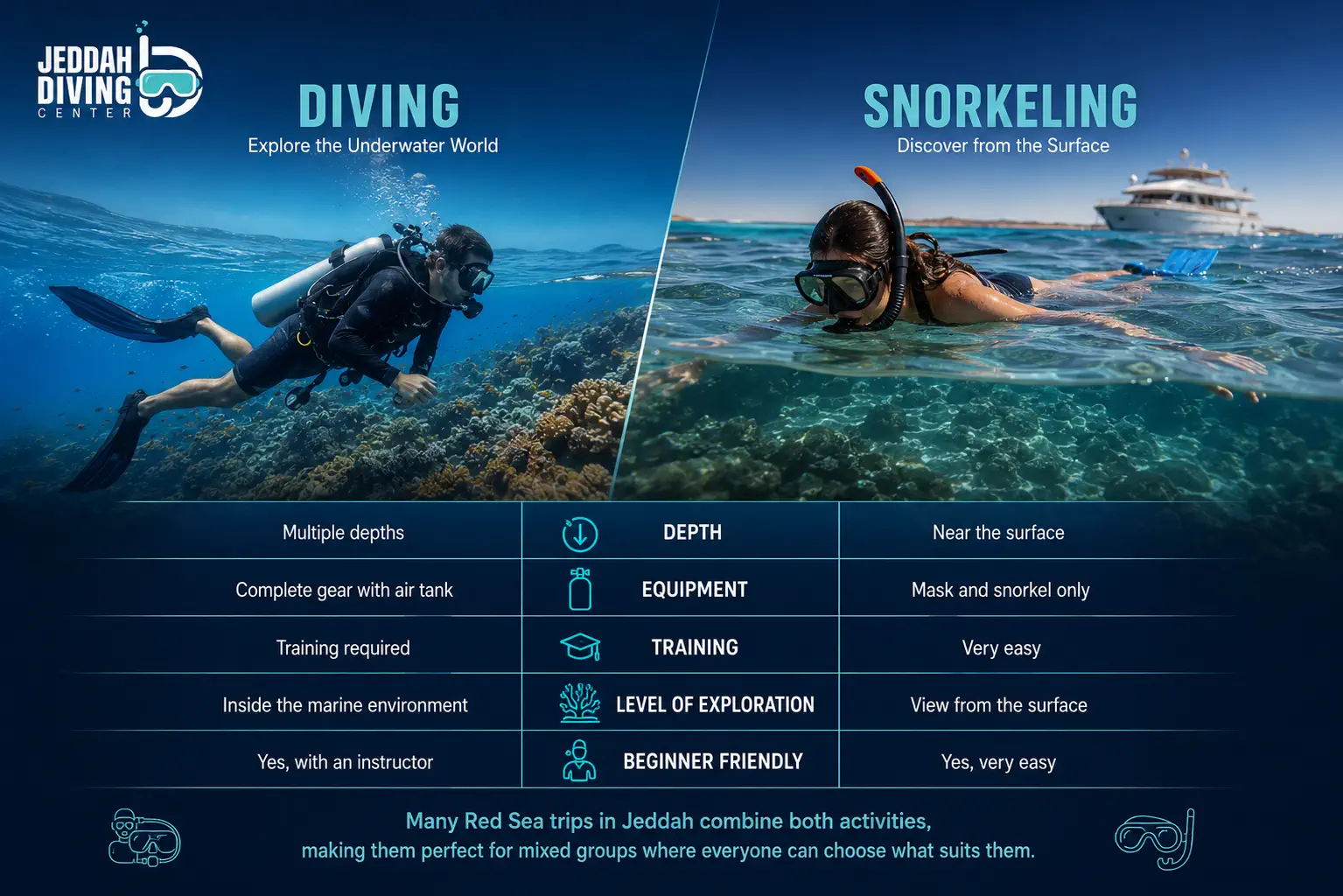
Snorkeling lets you observe marine life from the surface using simple equipment – a mask, breathing tube, and fins. No specialized training required, and it’s accessible to anyone who can swim.
Scuba diving takes you inside the marine world itself. You’re no longer watching from above – you’re part of the scene. You get close to the coral, come face to face with fish, and access depths and details that simply don’t exist from the surface.
| Scuba Diving | Snorkeling | |
| Depth | Varies | Near the surface |
| Equipment | Full setup with air tank | Mask and tube only |
| Training | Required | Minimal |
| Exploration level | Inside the environment | Observing from above |
| Beginner-friendly | Yes, with an instructor | Yes, easily |
Many Red Sea trips in Jeddah combine both activities, making them ideal for mixed groups where each person can choose what suits them best.
How to Prepare: A Practical Guide Before Dive Day
Good preparation makes a real difference to the quality of the experience – and it starts well before you step onto the boat.
Before the trip: Get proper sleep and drink enough water. Jeddah’s heat, combined with hours of sun exposure on the water, drains energy faster than most people expect. Avoid heavy meals directly before diving – movement on the boat and entering the water can cause discomfort on a full stomach.
What to bring:
- Sunscreen and sun protection
- Sunglasses and a towel
- Comfortable clothing and a dry change for after
- A water bottle and light snacks
- A waterproof camera if you want to document the experience
One practical tip: arrive early. Extra time before departure lets you meet your instructor, get familiar with the equipment, and settle in before the trip begins – and for a first-timer, that comfort makes a significant difference.
What a Full Dive Day Actually Looks Like
Most people want to know what the day involves before they book, especially for a first experience.
It begins at the dive center or marina, where equipment is prepared and the day’s plan is explained in full: the dive site, expected depths, safety protocols, and underwater communication signals. Then the boat sets off – and that journey itself is part of the experience, with open sea air and the Red Sea stretching out ahead.
On arrival, equipment goes on and the group descends gradually into the water. The first few minutes underwater are almost universally described as the most exciting: everything feels different, movement is slower, colors are sharper, and marine life surrounds you from every direction.
After the dive, everyone returns to the boat. Many people say the shared moments that follow – swapping photos and talking through what each person saw below – are among the best parts of the day. On longer yacht trips, those conversations stretch out into the evening, ending with the sun going down over open water.
Beyond the Basics: Freediving, Night Diving, and Yacht Trips
As Jeddah’s marine scene has developed, diving has expanded well beyond the traditional scuba experience. Three activities in particular have helped position the city as a genuine Red Sea adventure destination:
Freediving – Pure Movement, No Equipment
Freediving relies entirely on breath control and inner calm – no air tank, no heavy gear. What draws people to it is the sensation of pure freedom: moving through the water naturally, as if you actually belong there rather than passing through it as a visitor.
Physical strength matters far less than most people assume. Relaxation is the real skill – the calmer you are, the longer you stay under and the less energy you burn. This has made freediving one of the fastest-growing marine sports among younger enthusiasts in Jeddah, supported by specialist instructors and dedicated training programs at local dive centers. It’s also closely connected to underwater photography, since the freedom of movement allows photographers to approach marine life naturally, without disturbing the environment around them.
Night Diving – The Sea After Dark
From the outside, the ocean at night seems quieter. Below the surface, it’s actually more active. Creatures that stay hidden during the day emerge after dark, fish gather around torch lights in mesmerizing patterns, and the coral takes on deeper, more dramatic color under limited illumination. The whole scene becomes cinematic in a way that no daytime dive can replicate.
Night diving requires more careful organization and experience: powerful torches, constant visual contact, slow deliberate movement, and strict adherence to the dive plan. But the result is a dive that stays with you long after you’re back on the boat.
“My first night dive completely changed how I think about the ocean.” – Fahd Al-Salmi
Yacht Trips – A Complete Day on the Water
A significant part of what makes diving in Jeddah special doesn’t happen underwater at all – it happens above it. Yacht trips have become a central part of the Red Sea experience here, with the quality of boats and on-water services improving noticeably in recent years.
The moment the yacht leaves the shore, something shifts. The sea air, the sound of water, the open horizon – it creates an immediate sense of distance from the pace of daily life. Some trips focus exclusively on diving; others become full maritime days combining scuba, snorkeling, swimming, photography, food, and watching the sunset from open water. Everyone finds their own way to enjoy it.
Certified Dive Courses: From a Single Trip to a Real Skill
Many people start with one dive and find themselves looking into formal training shortly after. That’s a natural progression – the world discovered beneath the Red Sea tends to create curiosity that a single experience can’t fully satisfy.
Certified courses begin simply. The entry-level program — known as Discover Scuba Diving – lets anyone try a real dive under direct supervision without any prior certification. From there, skills accumulate gradually: breath control, buoyancy management, reading the marine environment, and handling different diving conditions.
The shift that trained divers describe after their first formal course isn’t purely technical – it’s in how the experience feels. Early on, most of the mental focus goes to equipment and breathing. After training, attention shifts to the details themselves: the shape of the coral, the movement of fish, the way light changes as you go deeper. That shift is precisely what turns diving from a one-time activity into a long-term pursuit.
Safety in Diving: Less Dangerous Than You Think
Scuba diving is considered one of the safest marine activities when it’s properly organized. The common misconception comes from conflating unstructured diving with what actually happens under professional supervision.
In well-run trips, safety begins long before anyone enters the water:
- A full briefing covering the site, expected depths, and emergency procedures
- Thorough equipment checks, piece by piece
- Confirming that every diver is comfortable before departure
- The buddy system — no one dives alone, regardless of experience level
- A slow, gradual ascent at the end to allow the body to adjust to changing pressure
The single most important element throughout is calmness. A calm diver uses less air, moves more efficiently, and produces better photographs. Experienced instructors know this, which is why helping beginners shed pre-dive nerves is always the first priority – before any technical instruction begins.
“The thing that surprised me most about diving wasn’t the depth. It was how quiet everything becomes down there.” -Turki Al-Ghamdi
Why People Come Back Again and Again
Because the Red Sea never shows you the same thing twice. Every dive is different. One day the visibility is extraordinary; another, a large sea turtle appears out of nowhere; on another, you find yourself at the center of a school of fish moving around you in a way that genuinely defies description.
Even returning to the same site brings something new. The light is different, the currents shift, the marine life moves between the reefs and the open water in constant, unpredictable patterns. No two days are identical.
But the deeper reason people keep coming back is the feeling itself – that complete stillness, the total disconnection from the speed and noise of everyday life. There’s no phone underwater, no notifications, no urgency. Time moves differently. Some people find in it a form of relaxation, others a continuous adventure, and many an escape from stress that nothing on the surface quite replicates.
Best Time to Dive in Jeddah
Diving is possible in Jeddah during most of the year, but each season has its own character.
Autumn through early spring brings more moderate temperatures above the surface, making long hours on the boat genuinely comfortable. Underwater visibility is excellent on many of these days, which is particularly valuable for photography.
Summer offers warmer water, and early mornings during this season can produce remarkably calm conditions with exceptional deep visibility. The key is timing — planning dives for the cooler morning hours rather than the midday heat.
Early morning, across all seasons, is the consistently preferred timing among experienced divers: calmer water, stronger natural light, more active marine life, and noticeably better conditions for underwater photography.
Common Beginner Mistakes Worth Knowing About
Knowing these ahead of time makes the experience considerably better:
Moving too fast and too forcefully – the most frequent mistake. Slow, calm movement is always more effective: it reduces air consumption and makes the whole experience more comfortable and enjoyable.
Fixating on the equipment – in the first few minutes underwater, some beginners focus so hard on gear that they forget to actually look around. This fades naturally with a little time.
Touching the coral -often done out of excitement rather than carelessness, but the marine ecosystem in the Red Sea is genuinely sensitive. Respect here isn’t optional.
Skipping hydration and rest — fatigue and dehydration have a direct impact on how your body performs underwater. Both are easy to avoid with a little preparation.
Why Divers in Jeddah Choose Jeddah Dive Center
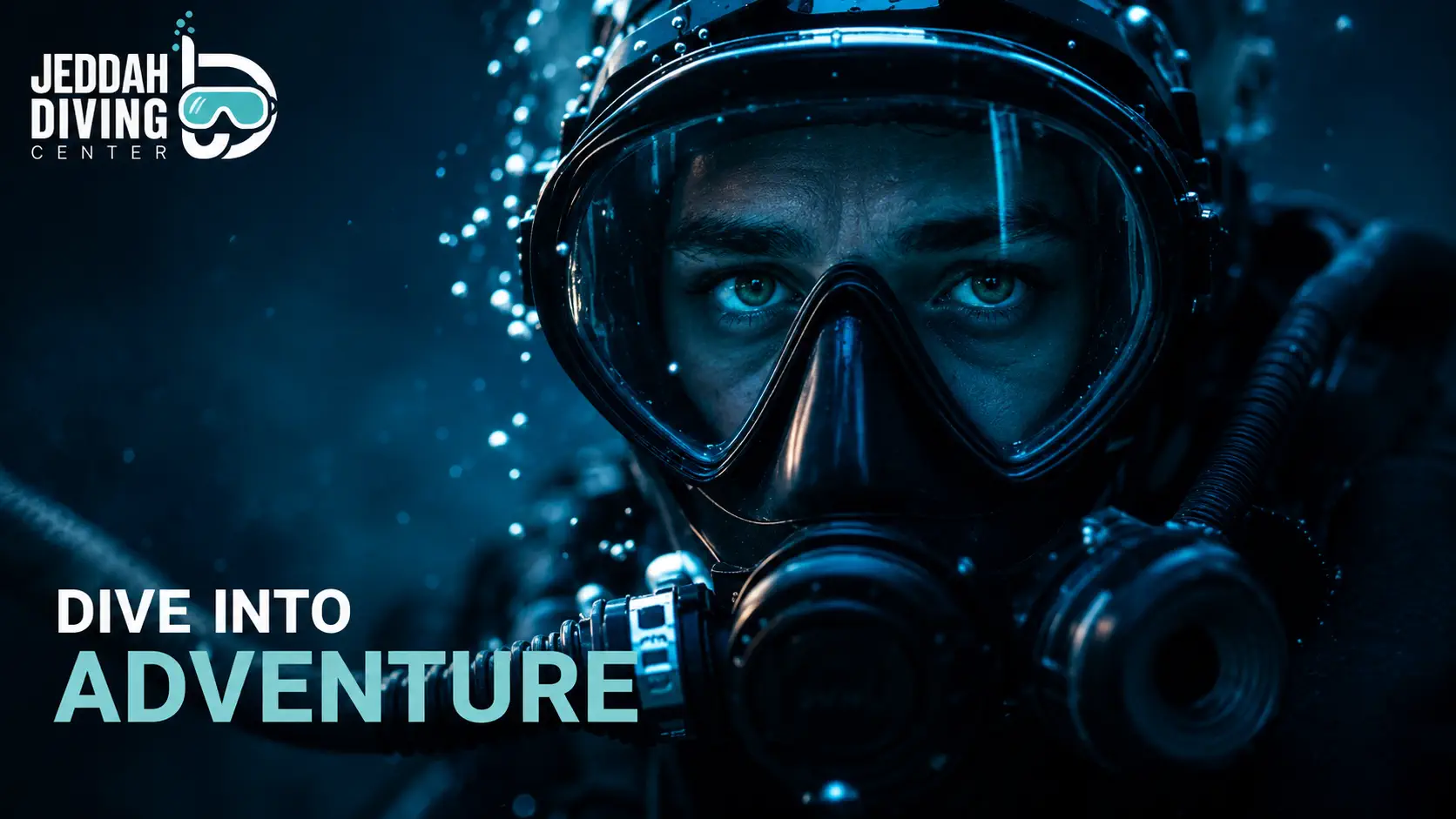
Once someone decides they want to dive, the next question matters just as much: who with? The difference between a forgettable trip and one that stays with you rarely comes down to the sea alone — it comes down to the team organizing it.
Jeddah Dive Center has built its reputation among the city’s diving community for one straightforward reason: the experience never feels transactional. From the first point of contact to the return trip, there’s a sense that the team genuinely loves the water — and that comes through in every detail of the day. The center takes care of selecting the right dive site for the group’s level, monitoring sea and weather conditions in advance, running thorough equipment checks, briefing divers clearly on the plan, and providing continuous support for beginners underwater — all without rush or pressure.
The programs on offer cover every stage: certified dive courses, beginner programs, professional and night diving trips, snorkeling, underwater photography, freediving training, yacht trips, and group or family packages. Whether it’s your very first time or you’ve been diving for years, there’s something built specifically for where you are.
“The whole experience changes when you can tell the team actually knows the water and cares about every detail.” – Abdullah Al-Harbi
Why Diving in Jeddah Stays With You
Because it’s not simply a leisure activity. Diving in the Red Sea brings together adventure, stillness, and wonder in the same moment -a combination that’s genuinely rare. Every descent carries something different, and everyone who comes back up surfaces with a feeling that’s difficult to find anywhere else.
With the continued growth of Jeddah’s dive centers, organized trips, and professional training programs, this experience is no longer reserved for the serious diver or the dedicated adventurer. It’s now genuinely accessible to anyone who wants to see a part of the Red Sea that most people never do.
And after that first dive, very few people find one is enough.
No comment