
 2500
2500The certification that unlocks Jeddah’s best dive sites.
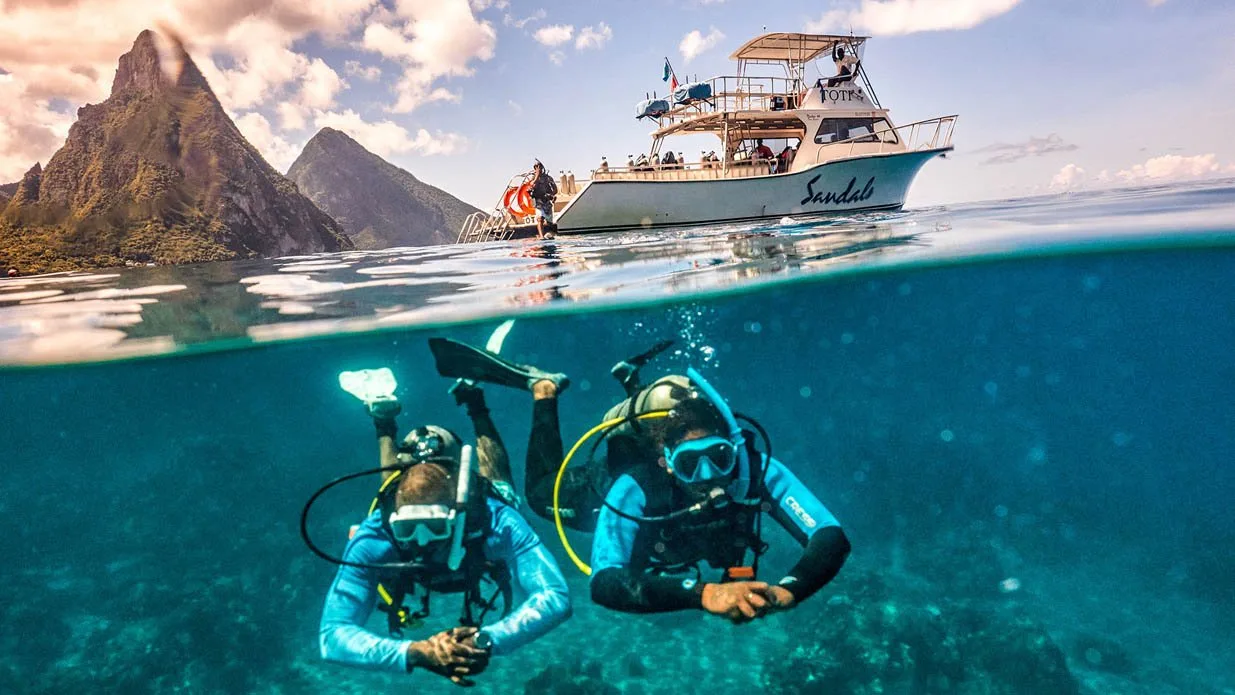
Shore diving has its place. But if you want to reach the dive sites that actually matter in Jeddah, the deeper reefs, the walls, the open blue- you need a boat. And diving from a boat is a different skill set entirely.
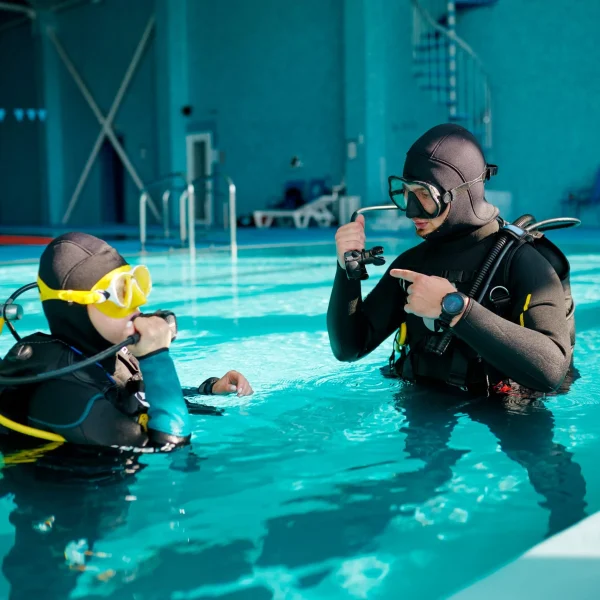
The PADI Boat Diver course is built for certified divers who want to do it right. Not just step on a vessel and hope for the best, but understand exactly how boat diving works, the terminology, the procedures, the etiquette, and the practical skills that make every boat dive smoother and safer.
How the PADI Boat Diver course works
eLearning, Before You Arrive, you complete the theory online before your dive days begin. Boat types and layouts, nautical terminology, pre-dive procedures, gear placement on deck, and how to read the conditions specific to open water boat diving. You show up informed, not guessing.
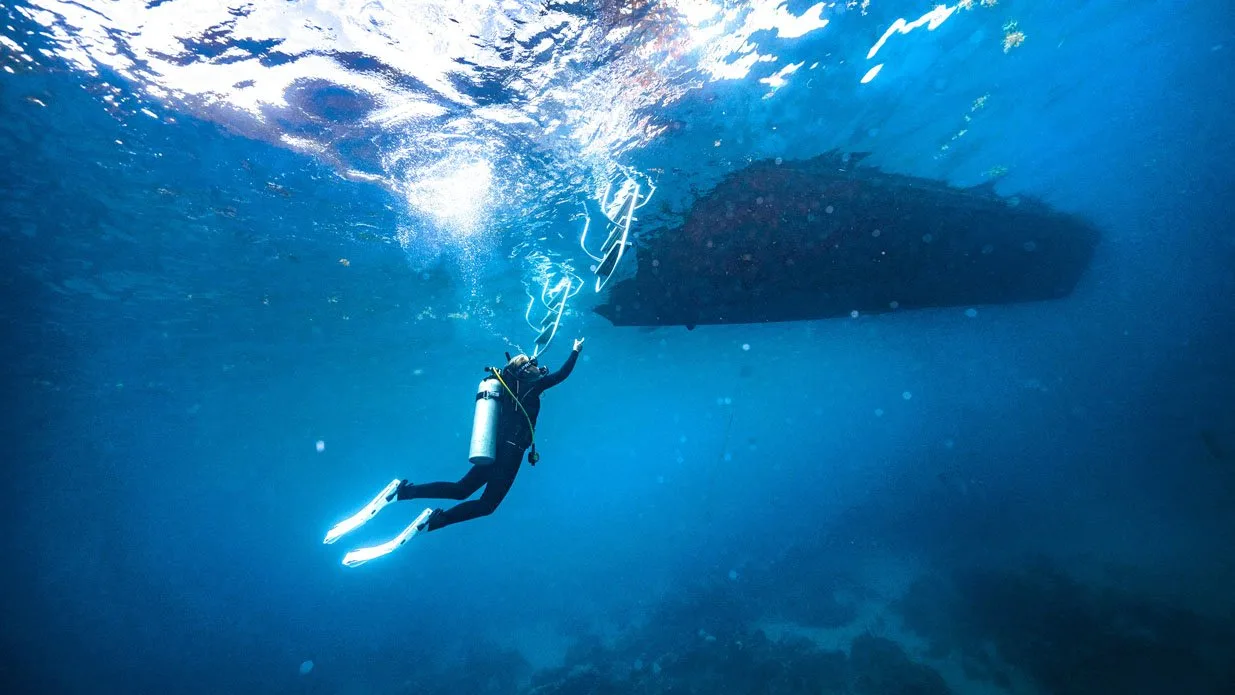
Two Open Water Dives, in the Red Sea, your two qualifying dives are conducted in open water. You’ll practice controlled water entries and exits from a vessel, buoyancy management in open water conditions, current awareness, and SMB (surface marker buoy) deployment for surfacing away from the boat. Everything is applied exactly where you’ll use it.
What’s Included
- PADI eLearning, complete online theory before dive day
- Two open water dives in the Red Sea
- Full equipment throughout
- Dive fees and boat access
- Certified PADI instructor
- International PADI Boat Diver certification, valid for life
Who is the PADI Boat Diver course for
Any certified diver, Open Water and above, who plans to dive from a boat. If you’re joining any of our Red Sea boat trips, this is the course to help you get ready.
Minimum age: 10 years. Prerequisite: PADI Open Water Diver certification or equivalent
Boat Diver FAQs
What are nautical phrases?
Nautical phrases are specialized terms used by sailors, boaters, and divers to communicate clearly on the water. Terms like “port” (left side of the boat), “starboard” (right side), and “aft” (rear of the boat) are standard examples. The Boat Diver Specialty covers these terms as part of your eLearning, so you arrive on the boat speaking the same language as the crew.
What are diving boats called?
Diving boats are referred to as “dive boats”, vessels specifically equipped to support scuba divers, typically featuring dive platforms, air tank storage, and entry/exit ladders. Dive boats vary in size depending on the location and type of diving. All our boat dive trips operate from purpose-equipped dive boats departing from Jeddah’s Red Sea Marina and Sharm Obhur.
What is boat diving?
Boat diving is a method of scuba diving where divers board a vessel to reach sites that cannot be accessed from shore, offshore reefs, walls, wrecks, and drop-offs. The boat anchors near the dive site, and divers enter the water from the vessel. It’s the primary way to access Jeddah’s best and most rewarding dive locations.
What is a surface marker buoy (SMB) used for?
An SMB is a brightly colored inflatable buoy that signals a diver’s location to surface vessels, critical for safety when surfacing away from the boat, in low visibility, or during drift dives. Deploying an SMB is one of the core skills covered in this course.
Which is better, shore diving or boat diving?
Both have their place. Shore diving is convenient and accessible. Boat diving opens up sites that simply can’t be reached any other way, deeper reefs, offshore walls, and areas with richer marine life. For serious exploration of the Red Sea, boat diving is essential. This course gives you the skills and certification to do it properly.
What are the medical requirements?
Scuba diving requires a minimum level of health and fitness. Certain medical conditions, medications, or recent surgery may require written physician approval before diving. Download and review the PADI Diver Medical form before enrolling to confirm you’re cleared. For medical questions, consult your physician or contact Divers Alert Network (DAN).
Boat Diver FAQs
What are nautical phrases?
Nautical phrases are specialized terms used by sailors, boaters, and divers to communicate clearly on the water. Terms like “port” (left side of the boat), “starboard” (right side), and “aft” (rear of the boat) are standard examples. The Boat Diver Specialty covers these terms as part of your eLearning — so you arrive on the boat speaking the same language as the crew.
What are diving boats called?
Diving boats are referred to as “dive boats” — vessels specifically equipped to support scuba divers, typically featuring dive platforms, air tank storage, and entry/exit ladders. Dive boats vary in size depending on the location and type of diving. All our boat dive trips operate from purpose-equipped dive boats departing from Jeddah’s Red Sea Marina and Sharm Obhur.
What is boat diving?
Boat diving is a method of scuba diving where divers board a vessel to reach sites that cannot be accessed from shore — offshore reefs, walls, wrecks, and drop-offs. The boat anchors near the dive site, and divers enter the water from the vessel. It’s the primary way to access Jeddah’s best and most rewarding dive locations.
What is a surface marker buoy (SMB) used for?
An SMB is a brightly colored inflatable buoy that signals a diver’s location to surface vessels — critical for safety when surfacing away from the boat, in low visibility, or during drift dives. Deploying an SMB is one of the core skills covered in this course.
Which is better — shore diving or boat diving?
Both have their place. Shore diving is convenient and accessible. Boat diving opens up sites that simply can’t be reached any other way — deeper reefs, offshore walls, and areas with richer marine life. For serious exploration of the Red Sea, boat diving is essential. This course gives you the skills and certification to do it properly.
What are the medical requirements?
Scuba diving requires a minimum level of health and fitness. Certain medical conditions, medications, or recent surgery may require written physician approval before diving. Download and review the PADI Diver Medical form before enrolling to confirm you’re cleared. For medical questions, consult your physician or contact Divers Alert Network (DAN).
Ready to Book?
Contact us on WhatsApp to get your eLearning access set up and confirm your course dates.

Reviews
There are no reviews yet.