

Whether you are preparing for your first scuba dive or already have dozens of dives in your logbook, learning scuba diving hand signals is one of the most important skills you can develop.
Once you descend beneath the surface, verbal communication disappears. Your dive buddy and instructor rely entirely on visual signals to communicate direction, depth, safety, and emergencies. A simple hand gesture can confirm everything is fine, ask for assistance, or even prevent a dangerous situation before it develops.
The good news is that these signals are universal. Whether you dive in Saudi Arabia, Egypt, Thailand, or the Maldives, the same basic underwater hand signals are recognized by professional dive centers around the world.
In this guide, you’ll learn every essential scuba hand signal, understand when to use it, avoid common communication mistakes, and discover practical tips that will make every dive safer and more enjoyable.
Why Scuba Diving Hand Signals Matter
Scuba diving is built on teamwork.
Although modern dive equipment is extremely reliable, communication remains one of the most important safety tools underwater.
A diver who cannot communicate effectively may struggle to:
- Alert a buddy about low air.
- Point out a hazard.
- Ask for assistance.
- Report discomfort.
- End a dive safely.
This is why every major diving organization, including PADI, SSI, and NAUI, teaches standardized hand signals during entry-level certification courses.
Using the same signals worldwide removes language barriers and helps divers communicate with confidence regardless of their nationality.
The Universal Scuba Diving Hand Signals
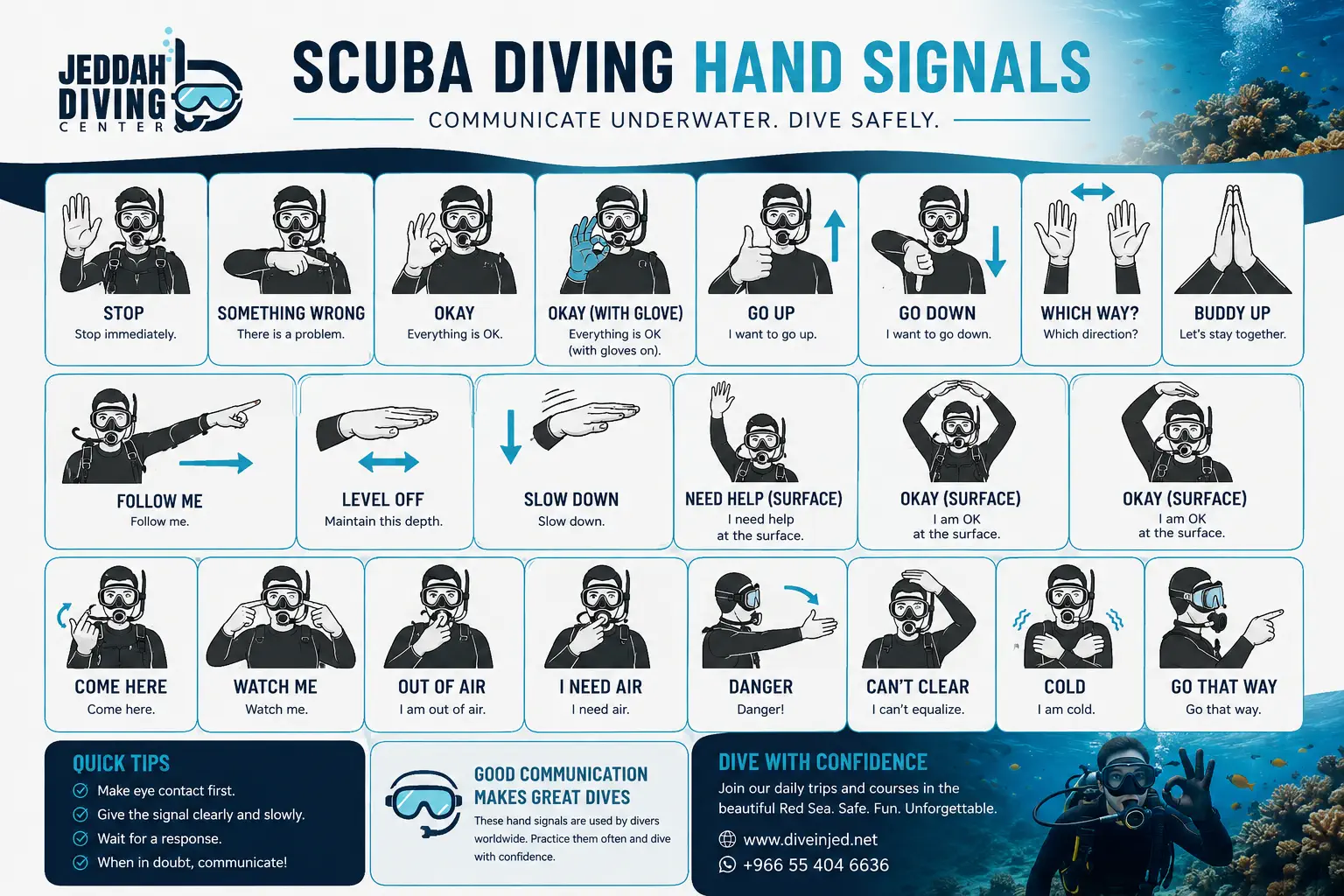
| Hand Signal | Meaning | When to Use It |
| OK | Everything is fine | Routine buddy checks |
| Stop | Stop immediately | Before changing direction or avoiding hazards |
| Go Up | Begin ascending | End of the dive or safety reason |
| Go Down | Descend | Continue descent together |
| Slow Down | Reduce swimming speed | Strong current or inexperienced buddy |
| Follow Me | Stay behind me | Instructor leading the dive |
| Level Off | Maintain current depth | Prevent unnecessary ascent or descent |
| Buddy Up | Stay closer | Low visibility or strong current |
| Danger | Warning | Marine life, boat traffic, or an obstacle |
| Need Help | Immediate assistance | Any unexpected problem |
Emergency Hand Signals Every Diver Must Know
Most dives are relaxed and enjoyable.
However, emergencies can happen.
Recognizing emergency scuba hand signals within seconds can make a significant difference.
Some of the most important emergency signals include:
Out of Air
This signal tells your buddy that your tank is empty.
It requires immediate air sharing using an alternate regulator.
I Need Air
This indicates low air rather than empty cylinders.
Divers should monitor their gauges regularly and communicate before reaching reserve pressure.
Can’t Clear
Sometimes a diver cannot equalize ear pressure.
Ignoring this discomfort may lead to ear injuries.
The correct response is to stop descending and communicate with your buddy or instructor.
Cold
Feeling cold may seem minor.
However, cold water increases air consumption and fatigue.
If a diver feels uncomfortable, ending the dive is often the safest decision.
Common Mistakes When Using Underwater Signals
Even certified divers occasionally make communication mistakes.
Avoid these common errors:
- Making gestures too quickly.
- Giving signals without eye contact.
- Creating personal signals.
- Forgetting to wait for confirmation.
- Staying too far away.
- Assuming your buddy understood.
Good communication is always two-way.
Every important signal should receive a clear response.
Tips to Remember Hand Signals Faster
Learning signals becomes easier through repetition.
Here are simple ways to remember them:
- Practice before every dive briefing.
- Review signals with your dive buddy.
- Watch your instructor demonstrate each gesture.
- Keep a printed hand signal chart in your dive log.
- Repeat emergency signals regularly.
After several dives, these gestures become second nature.
Learning Hand Signals During Your First Dive
If you’re trying Discover Scuba Diving, don’t worry.
You are not expected to memorize dozens of signals.
Your instructor will introduce only the essential ones before entering the water.
These usually include:
- OK
- Stop
- Go Up
- Go Down
- Follow Me
- Problem
- Equalize
- Low Air
The briefing takes only a few minutes, but it dramatically improves safety throughout the experience.
Learn Scuba Diving with Dive in Jeddah
Knowing the signals is only the beginning.
The best way to become comfortable using them is through real underwater practice with experienced instructors.
At Jeddah Diving Center, every beginner receives a complete safety briefing before entering the water. Certified instructors demonstrate each hand signal, explain its meaning, and ensure every participant feels confident before the dive begins.
Whether you’re joining a Discover Scuba Diving Boat Trip, starting your PADI Open Water Course, or exploring the spectacular coral reefs of the Red Sea as a certified diver, clear communication remains a priority throughout every dive. Daily trips depart from Red Sea Marina and are designed for both beginners and experienced divers, with professional guidance from start to finish.
If you’re ready to experience the underwater world safely, Jeddah Diving Center offers the perfect place to learn, practice, and enjoy scuba diving in one of the Red Sea’s most beautiful locations.
Final Thoughts
Every successful dive starts with good communication.
Mastering scuba diving hand signals allows you to stay connected with your buddy, react quickly to changing situations, and enjoy every dive with greater confidence.
Whether you’re preparing for your first underwater adventure or working toward your next certification, investing a little time in learning these universal signals will make every future dive safer, smoother, and far more enjoyable.
No comment